Slope stabilization is essential for protecting infrastructure from soil erosion, landslides, rockfalls, and ground instability. Slopes are continuously exposed to rainfall, wind erosion, groundwater movement, and weathering, which gradually weaken the soil and rock mass over time. Whether for highway embankments, railway cuttings, mining sites, hill roads, retaining walls, dams, or industrial facilities, effective slope stabilization is critical to ensuring long-term structural safety, operational reliability, and infrastructure durability.
One of the most reliable and widely adopted methods for slope protection is Shotcreting Services. By pneumatically applying high-strength concrete onto the slope surface, shotcreting creates a durable protective layer that minimizes erosion, strengthens loose surfaces, and enhances the overall stability of the slope.
In this guide, we explain the step-by-step process of slope stabilization using Shotcreting Services and why experienced shotcreting contractors play a critical role in successful slope rehabilitation projects.
Why Slope Stabilization is Important?
Unstable slopes can lead to severe structural and environmental problems, including:
-
- Soil erosion during heavy rainfall
-
- Rockfall hazards
-
- Landslides
-
- Damage to roads and railways
-
- Foundation instability
-
- Drainage failures
-
- Increased maintenance costs
-
- Safety risks to people and infrastructure
Professional Shotcreting Services provide an engineered solution that helps extend the service life of slopes while reducing future repair requirements.
What is Shotcreting for Slope Stabilization?
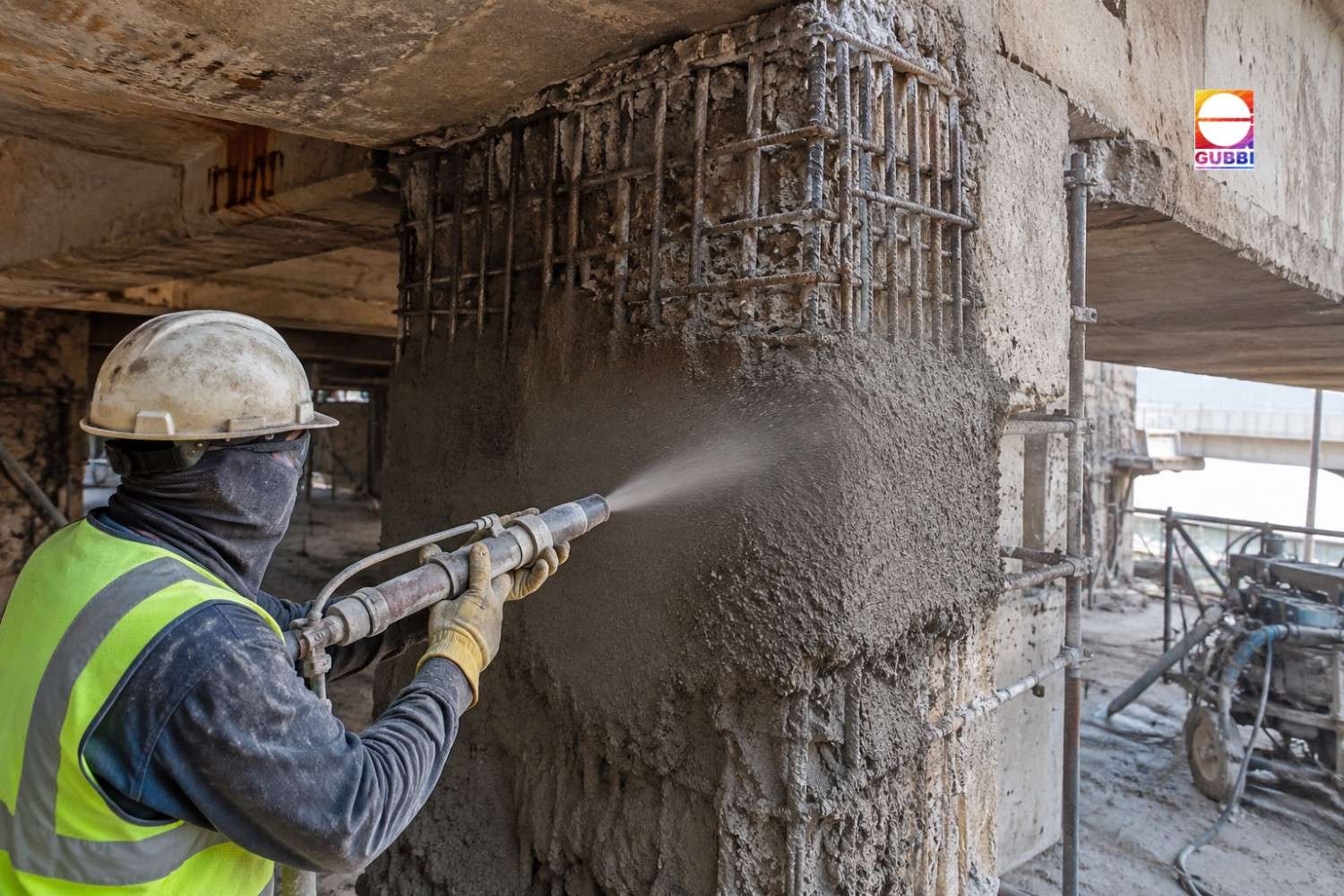
Shotcreting is a construction technique where concrete or mortar is sprayed at high velocity onto a prepared surface using specialized equipment. The process creates excellent adhesion, high density, and superior strength without requiring conventional formwork.
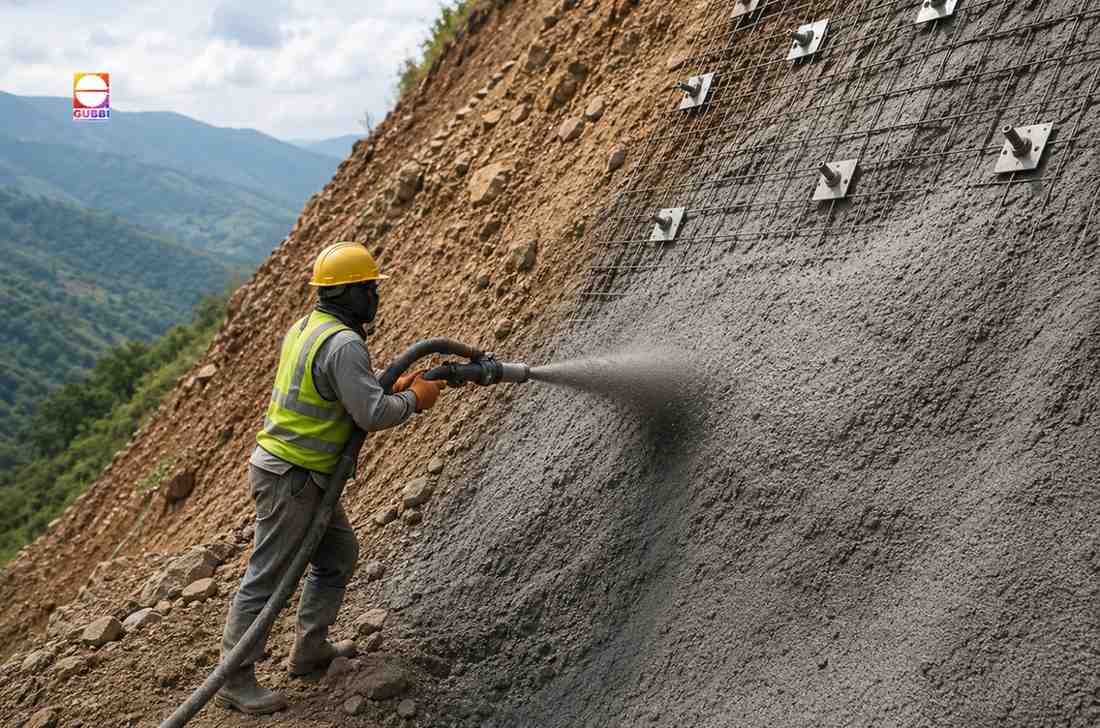
For slope stabilization, shotcrete is commonly combined with:
-
- Rock bolts
-
- Soil nails
-
- Welded wire mesh
-
- Reinforcement mesh
-
- Drainage systems
-
- Anchors
This integrated system forms a stable and durable slope protection solution.
Step 1: Detailed Site Inspection and Geotechnical Assessment
Every successful slope stabilization project begins with a comprehensive site investigation.
Professional engineers evaluate:
-
- Soil characteristics
-
- Rock conditions
-
- Groundwater movement
-
- Existing slope angle
-
- Crack patterns
-
- Surface erosion
-
- Vegetation impact
-
- Drainage conditions
-
- Load requirements
This assessment determines the most suitable slope stabilization method and shotcrete thickness.
A proper investigation helps avoid future failures and ensures the design addresses the root cause of instability.
Step 2: Engineering Design and Stabilization Planning
Based on the investigation, engineers prepare a customized stabilization plan.
The design includes:
-
- Shotcrete thickness
-
- Reinforcement layout
-
- Soil nail spacing
-
- Rock bolt locations
-
- Mesh reinforcement
-
- Drainage provisions
-
- Concrete grade
-
- Fiber reinforcement (if required)
-
- Construction sequence
Proper engineering design ensures long-term slope performance under varying environmental conditions.
Step 3: Surface Preparation
Before applying shotcrete, the slope surface must be thoroughly prepared.
Surface preparation involves:
-
- Removing loose soil
-
- Eliminating unstable rock fragments
-
- Cleaning dust and debris
-
- Removing vegetation
-
- Cutting unstable projections
-
- Washing the surface where necessary
Proper surface preparation significantly improves shotcrete bonding and overall durability.
Step 4: Installation of Soil Nails or Rock Bolts
Many slope stabilization projects require additional structural reinforcement.
Depending on site conditions, contractors install:
-
- Soil nails
-
- Rock bolts
-
- Ground anchors
These reinforcements strengthen the internal structure of the slope and prevent large-scale movement.
They also improve the effectiveness of the shotcrete facing.
Step 5: Placement of Reinforcement Mesh
Steel wire mesh or welded reinforcement mesh is installed over the slope.
The mesh helps:
-
- Improve tensile strength
-
- Control cracking
-
- Distribute stresses evenly
-
- Enhance bonding with shotcrete
-
- Increase overall durability
For larger slopes, reinforcement is installed section by section for better quality control.
Step 6: Drainage System Installation
Water is one of the primary causes of slope failure.
Professional Shotcreting Services include drainage solutions such as:
-
- Weep holes
-
- Drain pipes
-
- Horizontal drains
-
- Surface drainage channels
-
- Filter layers
Effective drainage relieves hydrostatic pressure behind the shotcrete layer and significantly increases service life.
Step 7: Shotcrete Application
This is the core stage of the slope stabilization process.
Using specialized shotcrete equipment, concrete is pneumatically sprayed onto the prepared slope at high velocity.
Professional operators ensure:
-
- Uniform thickness
-
- Excellent compaction
-
- Strong adhesion
-
- Minimal rebound
-
- Complete reinforcement coverage
-
- Smooth surface finish
Depending on project requirements, either wet-mix shotcrete or dry-mix shotcrete may be used.
The applied layer forms a durable protective shell that resists erosion, weathering, and mechanical damage.
Step 8: Layer-by-Layer Construction (If Required)
Large stabilization projects often require multiple shotcrete layers.
Each layer is applied after achieving the required initial strength.
Multiple layers improve:
-
- Structural integrity
-
- Load-bearing capacity
-
- Crack resistance
-
- Long-term durability
Layered construction is especially useful for high slopes and heavily weathered rock faces.
Step 9: Surface Finishing
After shotcrete placement, the surface is finished according to project specifications.
Depending on project needs, finishes may include:
-
- Natural textured finish
-
- Smooth finish
-
- Grooved finish
-
- Architectural finish
Proper finishing improves both durability and appearance.
Step 10: Curing and Quality Control
Proper curing is essential for achieving the desired concrete strength.
Quality control includes:
-
- Thickness verification
-
- Compressive strength testing
-
- Bond strength evaluation
-
- Rebound inspection
-
- Crack inspection
-
- Surface defect assessment
-
- Reinforcement verification
Adequate curing minimizes shrinkage cracks and improves long-term performance.
Applications of Shotcreting Services for Slope Stabilization
Shotcreting widely used in:
-
- Highway slope stabilization
-
- Railway embankments
-
- Mountain roads
-
- Tunnel portals
-
- Dam slopes
-
- Canal protection
-
- Mining projects
-
- Quarry walls
-
- Industrial facilities
-
- Retaining wall stabilization
-
- Infrastructure rehabilitation projects
Benefits of Professional Shotcreting Services
Choosing experienced Shotcreting Contractors offers several advantages:
-
- Fast project execution
-
- Superior structural strength
-
- Excellent surface adhesion
-
- Reduced soil erosion
-
- Enhanced slope stability
-
- Minimal maintenance requirements
-
- Improved weather resistance
-
- Longer service life
-
- Cost-effective rehabilitation
-
- Suitable for complex terrain
-
- Reduced need for conventional formwork
-
- Reliable performance in challenging environments
Why Hire Experienced Shotcreting Contractors?
Slope stabilization requires specialized equipment, skilled operators, and engineering expertise. Poor application can lead to weak bonding, uneven thickness, inadequate reinforcement coverage, and premature deterioration.
Experienced Shotcreting Contractors ensure:
-
- Detailed site evaluation
-
- Proper mix design
-
- Accurate reinforcement installation
-
- Controlled shotcrete application
-
- Compliance with quality standards
-
- Durable and safe slope stabilization solutions
Professional execution not only improves project quality but also minimizes long-term maintenance costs.
What is slope stabilization using shotcreting?
Slope stabilization using shotcreting involves spraying high-strength concrete onto soil or rock slopes to create a protective layer that reduces erosion, improves structural stability, and prevents slope failures.
Where are Shotcreting Services used for slope stabilization?
Shotcreting Services are commonly used for highways, railways, tunnels, dams, mining projects, retaining walls, industrial sites, canal embankments, and hillside developments.
Is shotcreting suitable for both soil and rock slopes?
Yes. With proper surface preparation and reinforcement, such as soil nails, rock bolts, or wire mesh, shotcreting is effective for stabilizing both soil and rock slopes.
What are the advantages of hiring professional Shotcreting Contractors?
Professional Shotcreting Contractors ensure correct surface preparation, reinforcement installation, quality-controlled concrete application, proper curing, and long-lasting slope stabilization.
How long does a shotcreted slope last?
A properly designed and professionally executed shotcrete slope stabilization system can provide decades of reliable performance with routine inspections and maintenance.
Conclusion
Slope instability can pose significant risks to infrastructure, public safety, and long-term project performance. A systematic approach to stabilization is essential for preventing erosion, landslides, and structural failures.
By following a proven process from geotechnical assessment and surface preparation to reinforcement, drainage installation, shotcrete application, and quality control Shotcreting Services provide a durable and cost-effective solution for protecting slopes in demanding environments.
When executed by Gubbi Civil Engineers Limited experienced shotcreting contractors, shotcrete delivers long-lasting structural stability, improved safety, and reliable performance across transportation, industrial, mining, and civil infrastructure projects.